



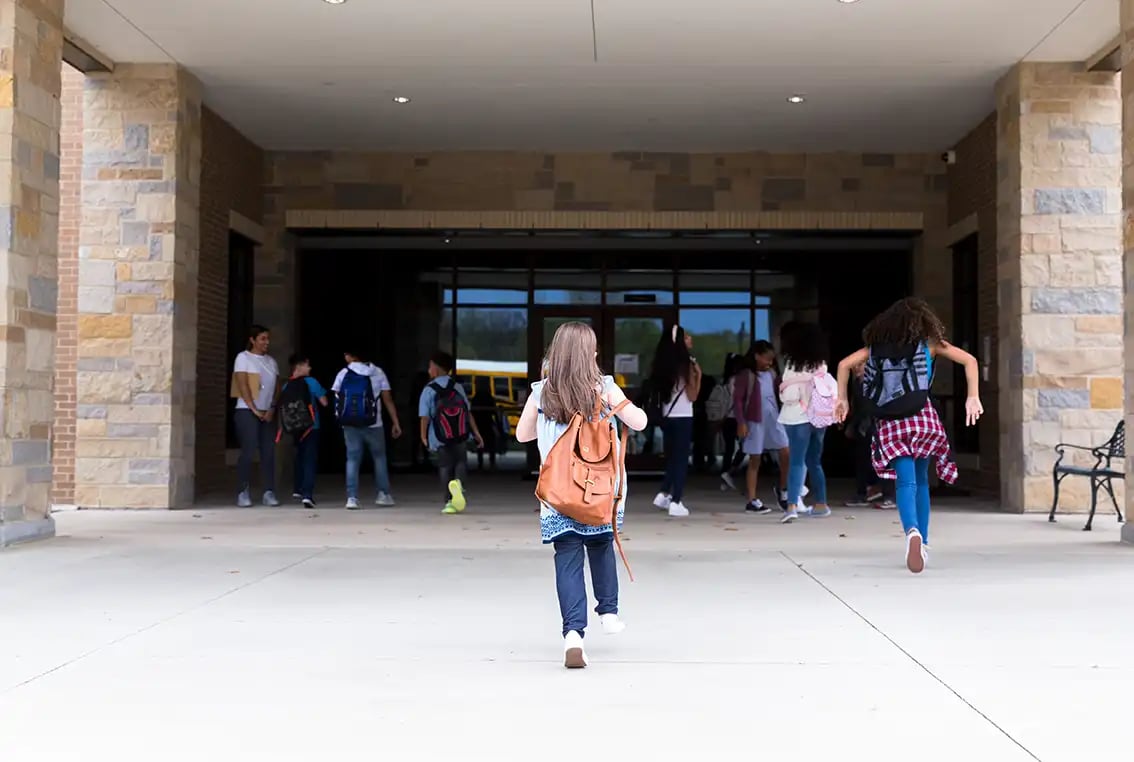
Behind the scenes of many educational institutions are day-to-day activities that go beyond educating young minds. There are security teams monitoring campus activity, facilities staff keeping buildings operational, transport teams coordinating student movements, and administrators managing a constant flow of events, visitors, and contractors.
Underneath it all is a need for effective, reliable communication.
Yet when it comes time to invest in a communications system, many schools, colleges, and universities face the same challenge of trying to understand what they actually need while balancing the budget.
So before comparing technologies or evaluating specific solutions, it's worthwhile to take a step back and understand what your campus needs from a communications solution.
What challenges do modern campus communications need to support?
A system that is perfectly suited to a small, single-campus school is not likely to be the right fit for a growing college, a university with multiple campuses, or a multi-school organization. Factors such as campus size, the number of operational teams, safety requirements, and day-to-day activities all influence what a communications system needs to deliver for various educational institutions.
The first step in making sure you get a system that suits your institution’s needs is considering the main operational areas education institutions contend with:
Security operations
Security personnel often need to coordinate routine campus activities, including access control, responding to incidents such as vandalism or trespassing, monitoring large gatherings or events, and supporting other campus safety initiatives. The speed and reliability of communication is crucial to help teams respond quickly and maintain awareness across the campus.
Emergency response
When emergencies occur, communication becomes even more critical. Lockdowns, evacuations, severe weather events, and medical emergencies all require staff to communicate clearly and share information quickly.
Facilities and maintenance
From responding to faults and service requests to coordinating contractors and managing multiple buildings, facilities teams often rely on real-time communication to keep campuses operating efficiently and minimize disruption to staff and students.
Student transportation
For those responsible for student transportation or managing large numbers of students moving between locations, communications can help coordinate vehicles, staff, schedules, and unexpected changes throughout the day.

Events and community activities
Many schools, colleges, and universities regularly host sporting events, assemblies, performances, graduations, and community activities. These events often require teams to coordinate security, logistics, facilities, and crowd management simultaneously.
Managing multiple buildings and campuses
A single-campus school will likely have very different needs than a university spread across multiple buildings or campuses. Coverage requirements, the number of users, types of buildings involved, and the level of coordination required can all influence what type of communications solution is appropriate.
The questions to ask when selecting a radio system
Once you've identified the communication challenges your institution faces, the next step is understanding how those challenges impact what you'll need from a communications solution.
The answers to the following questions can help clarify whether a simpler solution or one with greater capacity is the better fit for your environment.
1. How large is the area you need to cover?
Coverage is often one of the first considerations when evaluating communications systems.
A small school operating from a single site may have very different coverage requirements than a university with multiple buildings, outdoor spaces, sports facilities, or separate campuses. Understanding the environments where staff need to communicate can help narrow down the options.
Consider:
-
Do users operate primarily within a single building or across an entire campus?
-
Are there outdoor areas, sports fields, car parks, or remote facilities that need coverage?
-
Will staff need to communicate between multiple buildings or campuses?
2. How many people and teams need to communicate at one time?
Some schools may only need facilities and administration staff to stay connected throughout the day. Others may have dedicated security teams, transport coordinators, event personnel, and maintenance crews all sharing the same communications system.
Consider:
-
How many users will require radios each day?
-
Which departments need access to radio communications?
-
How often will multiple teams need to communicate simultaneously?
-
Are there periods, such as sporting events or graduations, when communication activity increases significantly?
3. What situations does the system need to support?
For some institutions, reliable day-to-day coordination may be the primary requirement. Others may need additional capabilities to support lockdown procedures, emergency response plans, lone workers, or incident management processes.
Consider:
-
How important is rapid communication during emergencies?
-
Do you have staff who regularly work alone or in isolated locations?
-
Are there specific safety procedures that rely on communications?
-
Will security and operational teams need priority access during critical incidents?
4. How simple does the solution need to be?
When evaluating communications systems, it's easy to focus on features. In practice, however, usability is just as important. A communications system should fit naturally into day-to-day operations and be manageable for the people using and supporting it.
Consider:
-
How much training will users require?
-
Who will manage the system?
-
Do you need the essential communication capabilities, or more enhanced functionality?
The best solution is not necessarily the one with the longest feature list. It's the one that aligns most closely with how your institution operates and what your teams need to accomplish each day.
Choosing the right technology for your requirements
Now that you have a good idea of the coverage requirements, number of users involved, desired safety outcomes, and level of complexity you need, it’s time to assess the technologies available. Cellular, Wi-Fi, and radio technologies were designed to address different challenges, which means each offers distinct advantages and limitations.
Cellular solutions can support team communications through push-to-talk applications, while Wi-Fi can enable similar capabilities within a local network. However, both typically rely on additional software layers and infrastructure beyond the communication device itself, leaving it more vulnerable in times of cellular or power outages.
Two-way radio was designed specifically for coordinating groups of people in real time. Push-to-talk communications allow users to quickly share information with individuals or groups without dialing numbers or launching applications and it utilizes infrastructure that is distinct from cellular networks to maintain reliability even during high traffic. In some areas, radio is also preferred for its ability to coordinate with local responders during crisis.
Many education institutions choose radio communications for the exceptional reliability and speed of use during emergency situations.
How to choose the right radio solution
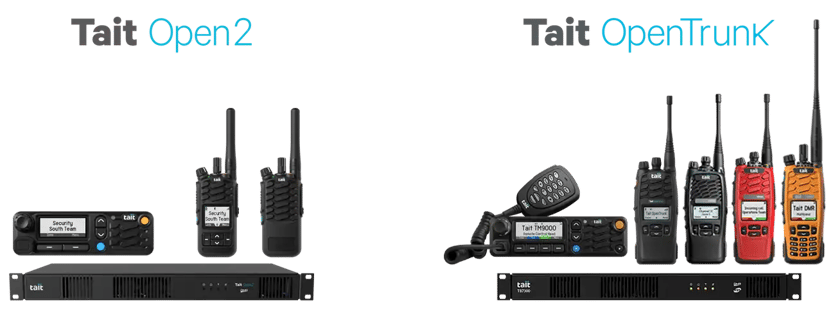
The next decision comes down to finding the right balance between simplicity, capability, and operational fit. Both Tait Open2 and Tait OpenTrunk provide professional DMR (Digital Mobile Radio) communications, but they are designed to support different requirements.
Tait Open2: When simplicity is the priority
Tait Open2 is designed for educational institutions that need reliable communications without unnecessary complexity. Built on DMR Tier 2 open standards, it provides the essential capabilities many schools and colleges need to keep staff connected and supported.
Tait Open2 may be a good fit if:
-
Coverage requirements are relatively straightforward
-
User numbers are moderate with only a few operational groups
-
You’re looking for an accessible entry point into professional radio communications
-
Ease of deployment, management, and use are important considerations
Tait OpenTrunk: When capacity and scalability become more important
Tait OpenTrunk is designed for education institutions with more demanding communication requirements. Built on DMR Tier 3 open standards, it provides support for larger user groups and enhanced communications capabilities while maintaining a path for future expansion if requirements evolve.
Tait OpenTrunk may be a good fit if:
-
Coverage is required across larger campuses, multiple sites, or more challenging environments
-
Many users or operational teams need to communicate
-
Enhanced communications capabilities are required
-
Growth and the potential for additional capacity is a key consideration
A simple way to think about the decision
If your priority is providing straightforward, reliable communications for a small to moderate number of users and groups, Tait Open2 may provide everything you need.
If your operational environment requires greater capacity, supports a larger number of users, enhanced communication capabilities or future-proof scalability, Tait OpenTrunk may be the better fit.
Keeping your campus safe and connected, now and in the future
While features, coverage, and cost are important factors to consider, they are only one part of the decision. The more important question to ask is whether a solution supports the way your institution actually operates.
A system that is a good fit for a single-campus school may be the wrong choice for a large university – not because the technology is better or worse, but because the operational requirements are different.
Taking the time to understand who needs to communicate, how teams work together, and what situations the system needs to support can help educational institutions make more confident decisions and avoid overinvesting in capabilities they don't need.
Whether that leads to a straightforward solution such as Tait Open2 or a more enhanced solution such as Tait OpenTrunk, the goal remains the same: providing staff with reliable communications that help keep day-to-day operations running smoothly and support a coordinated response when it matters most.
The goal is not to choose the most advanced solution available. It's to choose the solution that best aligns with how your institution operates and the communication challenges your teams face every day.
Every campus is different. We’re here to help you find the right solution for you.
Get in touch with one of our experts to assess your requirements and find the best communications solution for your campus.

COMMENTS