




Why public safety and utilities are the true backbone of critical infrastructure
Article written by Dan Draughn, Tait Communications Business Solutions Manager
In discussions about critical infrastructure, it’s common to reference the officially designated sectors and their interdependencies. Yet, in practice, two groups must be closely aligned in their ability to serve and protect the public: public safety and utilities.
At the center of both lies a shared dependency that is often taken for granted until it fails: reliable, resilient communications.
Public safety and utilities enable every other sector
The United States has rightly identified multiple critical infrastructure sectors, each essential in its own way. However, the operational reality is that public safety and utilities play an integral role in the safe functioning of communities and citizens.
If public safety agencies are unable to operate effectively:
- Law and order deteriorate
- Law enforcement, fire protection and emergency medical response are delayed or ineffective
- Communities become less stable and more vulnerable
In these conditions, utility operations become exponentially more difficult. Crews may be unable to access sites safely, coordinate restoration efforts, or protect critical assets.
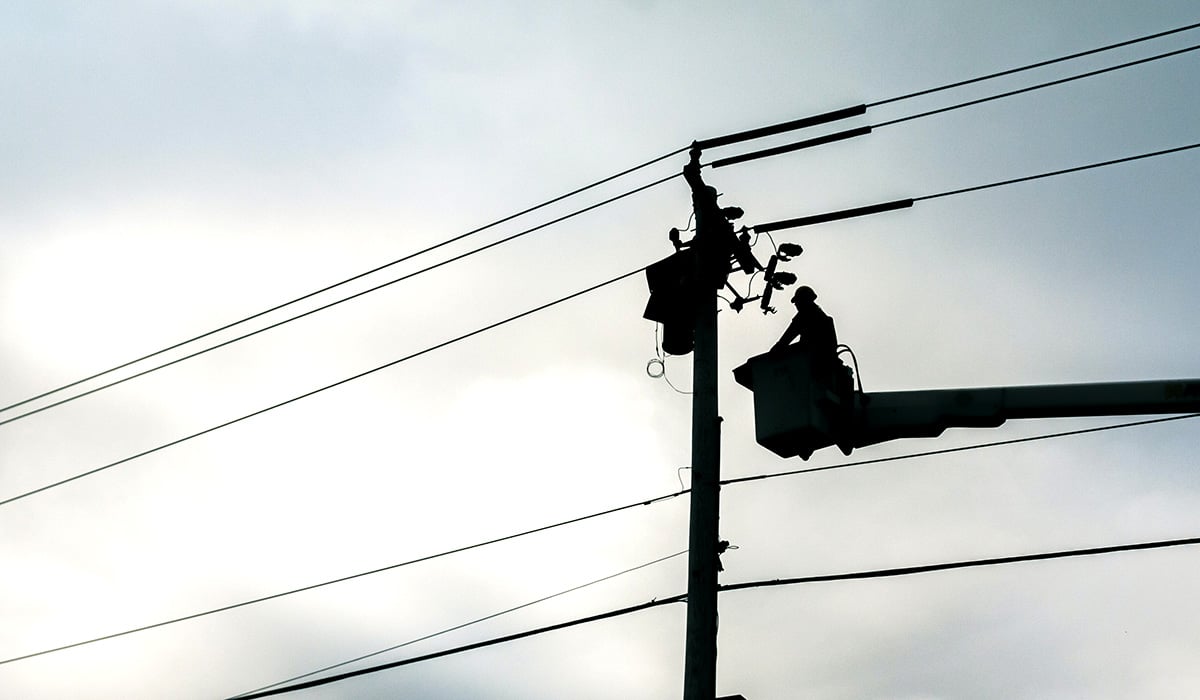
Conversely, if utilities cannot operate as intended:
- Power, water, gas, and communications services are disrupted
- Hospitals, transportation systems, financial services, and supply chains suffer
- The workload placed on public safety agencies escalates beyond control
This creates a compounding failure loop, where the inability of one sector amplifies risk across all other critical infrastructure sectors.
Communication is not a convenience, it is a prerequisite
Public safety agencies cannot function as designed if their communications systems are unavailable, degraded, or unreliable. Law enforcement, fire services, and emergency medical responders depend on real-time, mission‑critical communications to:
-
Maintain law and order
-
Coordinate emergency response
- Protect lives and property
- Share situational awareness across agencies
When communications experience significant limitations, or fail entirely, response times increase, coordination breaks down, and risk escalates rapidly. The same reality applies to utility organizations.
Meanwhile, utilities rely on communications to manage grid operations, monitor system health, dispatch crews, and respond to outages or physical and cyber incidents. Without dependable communication, utilities lose visibility and control over systems that must operate continuously and safely.
Communications failures are a systemic risk, not a sector‑specific problem
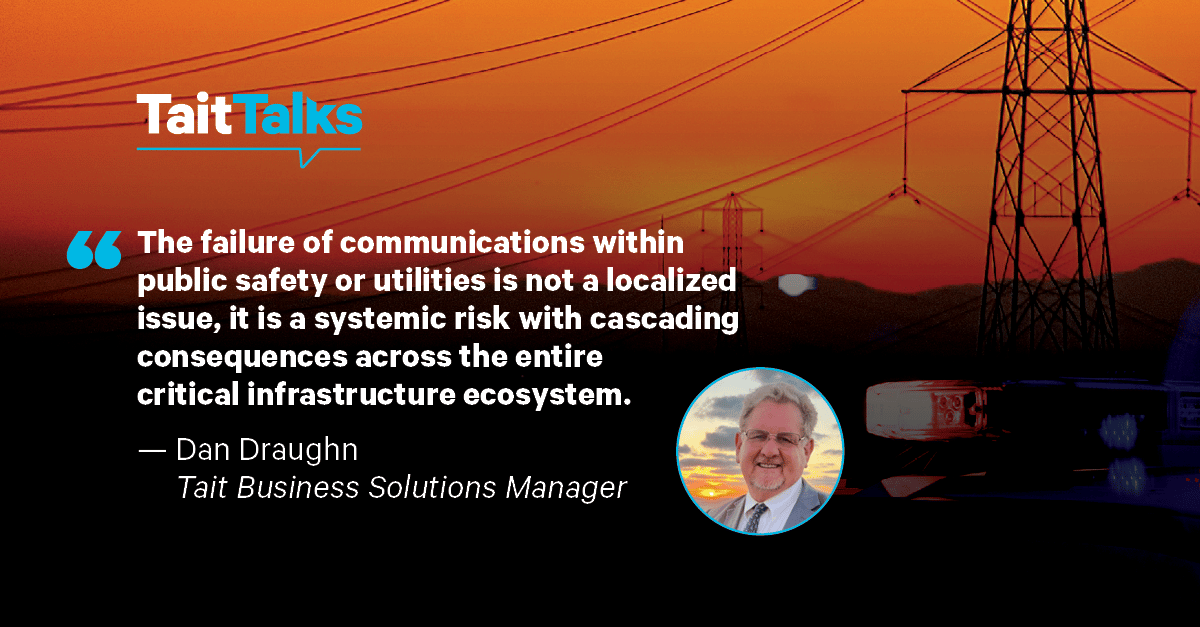
"The failure of communications within public safety or utilities is not a localized issue, it is a systemic risk with cascading consequences across the entire critical infrastructure ecosystem." Dan emphasizes.
When first responders cannot communicate, incidents grow larger and more complex. When utilities cannot communicate, restoration slows, outages expand, and public safety demand surges. In either case, the margin for error disappears quickly.
When risk is systemic, communications must be resilient by design
Resilient, redundant, and interoperable communications must be treated as a foundational necessity, not an operational afterthought. Practically, this includes:
-
Hardened networks designed to operate during disasters
-
Redundancy across technologies and paths
-
Interoperability between public safety and utility organizations
-
Planning for degraded or denied communications environments
True communications resilience is about ensuring the organizations responsible for protecting communities and maintaining essential services can function when conditions are at their worst.
Designing communications for the reality of mission‑critical operations
At Tait Communications, this operational reality is reflected directly in how mission‑critical communications solutions are designed and delivered. Our core values—Commitment to Listen, Courage to Act, and Integrity to Deliver—have directly impacted the development of the multiband, multi-protocol TP9900 portables and TM9900 mobiles.
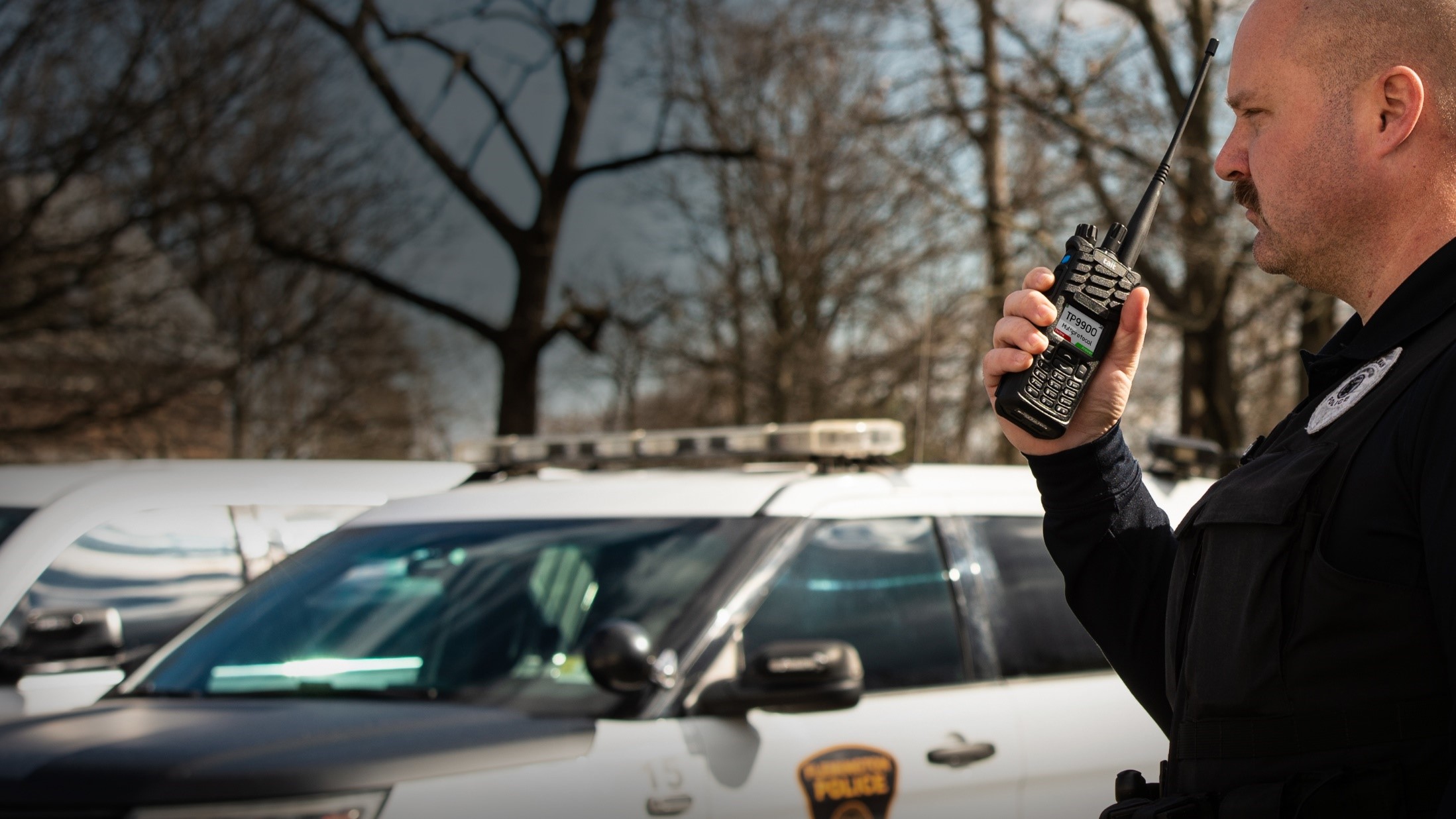
These Tait Tough mission‑critical communications subscribers are purpose‑built to support public safety and utility operations 24/7, in environments where failure is not an option.
Both the TP9900 and TM9900 series are multiband, multi‑protocol end‑user radio devices designed to simplify operations while increasing resilience. With a simple knob turn, users can change bands as needed or switch between P25 and DMR systems, enabling seamless operation across different networks and agencies.
This capability allows frontline personnel to carry a single device that historically would have required multiple land mobile radios, reducing complexity and cost, improving interoperability, and ensuring communications continuity in dynamic or degraded environments.
This is where Tait also steps in with several rapid deployable communications options to fill in coverage gaps, re-establish connectivity after a disaster, or improve the reliability of a network.
Final thought: Prioritizing critical communications is more important than ever
In summary, if public safety cannot maintain law and order, provide fire protection, or deliver timely emergency medical response, utilities will struggle to sustain grid operations. If utilities cannot operate as intended, the demands placed on public safety quickly become unmanageable.
When communications fail, everything else follows.
Protecting and prioritizing critical communications for public safety and utilities is, in reality, protecting communities and the public.
At Tait Communications we design for the mission-critical needs of utilities and public safety teams. Coverage is what matters most.
Learn more about in Tait Talks: Why Coverage is King in Mission-Critical Communications.
COMMENTS