




When choosing a mobile radio for in-vehicle communications, the primary considerations are usually around power, coverage, and compatibility with technology standards such as DMR, P25 or broadband. While these are critical factors to consider, the mobile unit is not what users interact with day to day — the control head is.
The control head is the interface to the radio that your team relies on to communicate, coordinate, and respond. In many cases, it determines how quickly and confidently users can access the radio when it matters most.
If the control head does not match how your team works, even the most capable radio system can become difficult to use in practice.
Choosing the right control head comes down to understanding your user's operational reality.
What is a mobile radio control head?
.webp?width=826&height=415&name=image%20(1).webp)
A mobile radio is the core communication device installed within a vehicle, providing connectivity, range, and audio performance while the control head is how users access those capabilities. It’s a visible and physical interface that allows users to change channels, adjust audio, and manage communication.
Control heads can be installed in two main ways. They can be mounted directly to the radio body within the dashboard, or installed remotely, where the radio body is positioned elsewhere in the vehicle. Local mounts are the most cost-effective choice while remote mounts require additional cabling and mounting kits.
Audio and accessory choices, such as simple or keypad microphones and rugged or standard external speakers also play an important role in configuration of the control head.
In every case, the control head acts as the user’s point of interaction. Its design, installation, and configuration determine how easily users can operate the radio while undertaking their mission.
What factors should you consider when choosing a control head?
Choosing a control head comes down to how its features, configuration, and installation align with real-world use. It's important to consider the type of vehicle it will be installed in, the user's operational activity, how frequently it's used, the operating environment, and the user's attention availability.
Together, these factors highlight why control heads are available in various forms to suit an array of preferences.

How vehicle type and operational activity shape installation requirements
The design and layout of the vehicle can significantly influence where a control head can be installed and how easily users can interact with it. Dashboard space, sight lines, and reach all place practical constraints on control head placement and configuration.
Some vehicles allow radio interaction from a single, fixed position, while others require the flexibility to adjust where the interface sits within the cab.
How work is carried out in and around the vehicle also has a significant impact on control head installation requirements. Some teams interact with the radio almost entirely from the driver’s seat, using it from one consistent position while others move in and out of the vehicle or need to access the radio from multiple locations while working.
How frequency of use and operating environment influence interface and configuration needs
How often the radio is used and the operational environment also dictate how reliant users are on their radios — shaping interface and configuration needs.
Some operations involve occasional, predictable communication on a limited number of channels. Others require frequent interaction, coordination across multiple teams, or more structured communication during the shift. As communication becomes more frequent or complex, the need for speed, clarity, and direct access to functions increases.
Roles in controlled environments with minimal distractions can support simpler interaction. In contrast, noisy, high‑movement, or visually demanding environments – especially those involving PPE such as gloves – require interaction that is easy to recognize, tactile, and resilient to distraction.
How attention availability determines interface capability
Different users will have differing levels of attention they can safely give to the radio, depending on their role. When attention is limited (such as when driving, operating equipment, or managing high‑risk tasks) interaction must reduce effort rather than add to it. Interfaces that require users to look down, navigate menus, or interpret complex displays can slow response times and increase risk.
Understanding these different priorities helps teams balance simplicity, flexibility, and performance based on their own operational context.
Which control head is the right one for your team?
Tait mobile radios have a wide range of control head options to choose from, that prioritize different interaction, configuration, and operational needs. All options have high-resolution color display and are compatible with TM9300, TM9400, TM9700, TM9800 and TM9900 mobile radios.
When to choose the TCH3 – a local mount control head with speaker
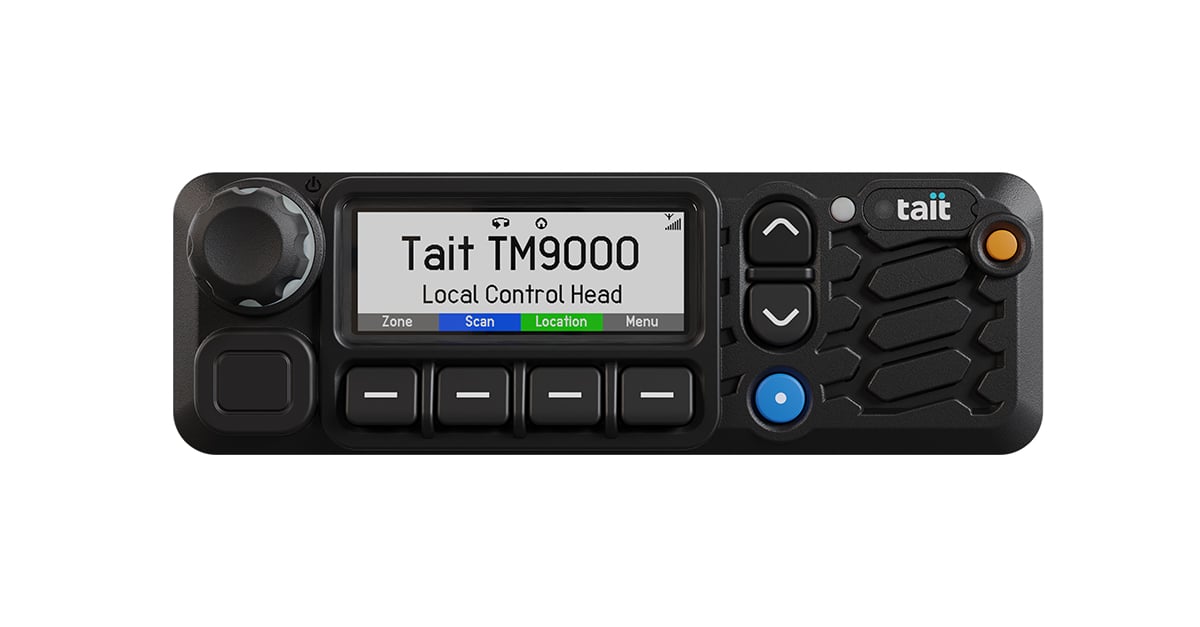
This control head is well suited for simple operations and simple installations.
As a local mount control head, it's designed to fit the body of the Tait TM9000 mobiles. Making this control head effective for teams where ease of use, reliability and cost efficiency are priorities.
In environments where noise is higher, the TCH3 can be paired with external speakers to support clearer audio while maintaining a simple interface. Coupled with a standard microphone, it suits roles with occasional input.
This design is best for operations such as public works, oil and gas, agriculture, and search and rescue where communication is important, but users typically stick to a small number of channels.
When to choose the TCH4 – a remote control head with speaker
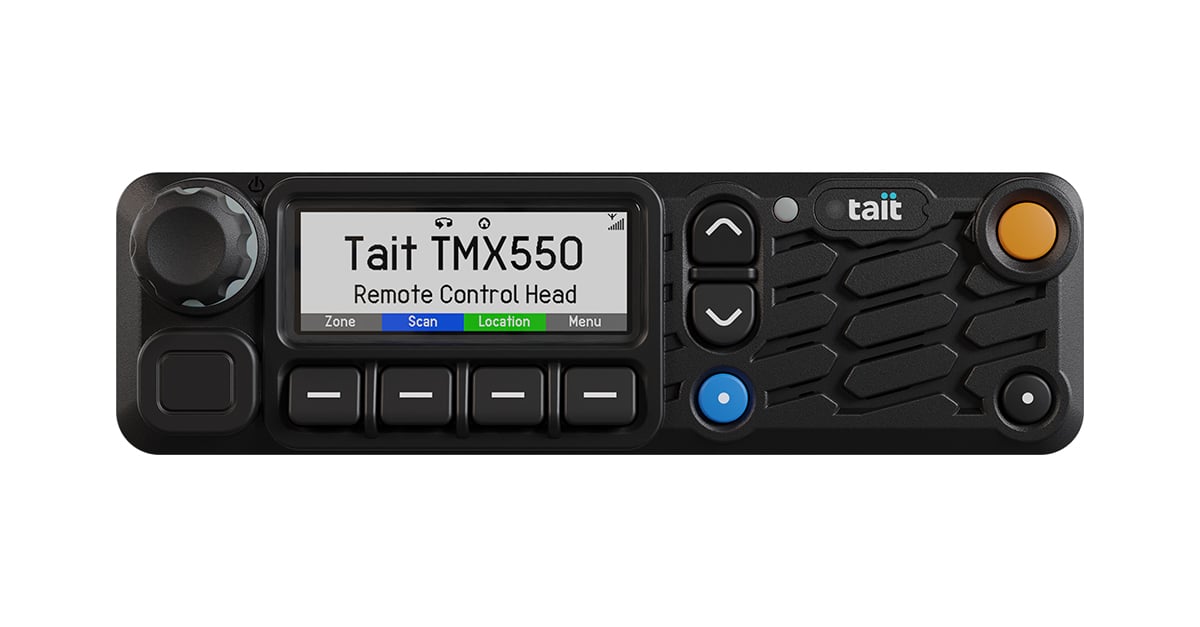
The TCH4 is a remote mounted control head, designed for installation flexibility and improved accessibility.
Paired with an optional keypad microphone, users can input calls or IDs without relying on the radio body when they are operating from different areas.
A fifth programmable function key and a built-in covert microphone give operators faster access to critical functions and communications in emergencies should the configured microphone fail – right from the radio body.
The flexibility of the TCH4’s remote capabilities and additional functions is popular across fireground, line crews and roadside fleets such as utilities and transport operations.
When to choose the TCH6 – a remote control head with keypad
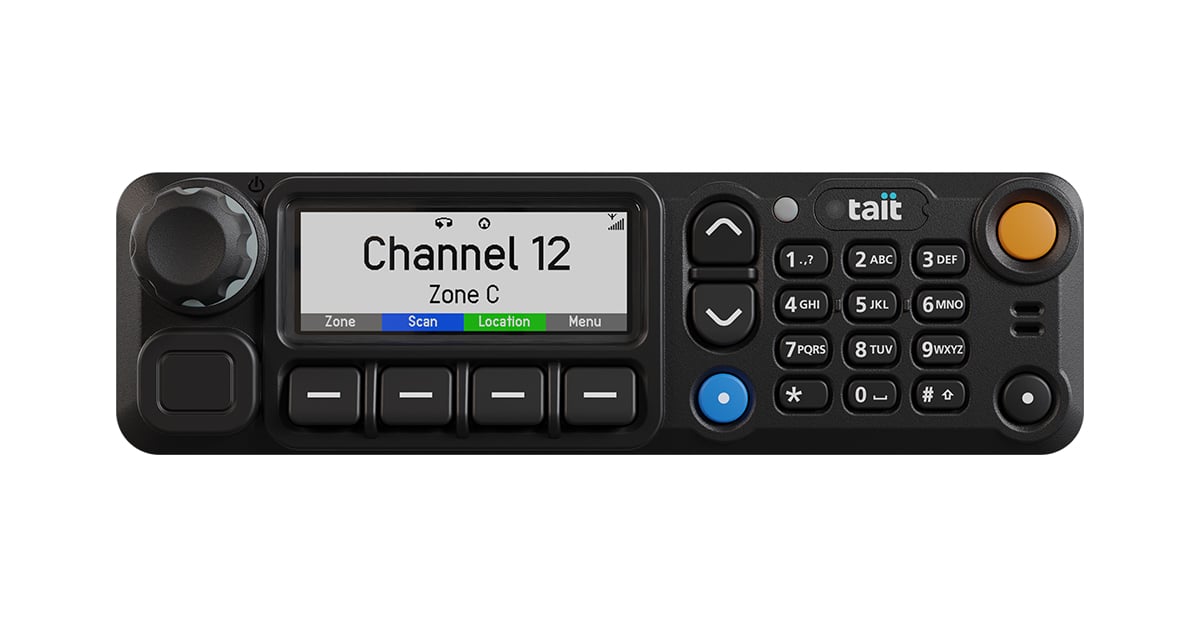
The TCH6 is built for primary radio operators who require maximum control, accuracy, and direct input from the control head interface itself.
Instead of requiring a keypad microphone, the control head has a built-in keypad allowing users to manage communication directly from a fixed, visible interface.
An external speaker is required, however, this means louder and clearer audio — especially when paired with Tait's Rugged External Speaker.
This control head with keypad option is practical for when communication is structured, closely managed and primarily from a fixed position, commonly used for dispatch-supervised crews in law enforcement, or operations in utilities, port and mining environments.
When to choose the TCH8 – an advanced control head
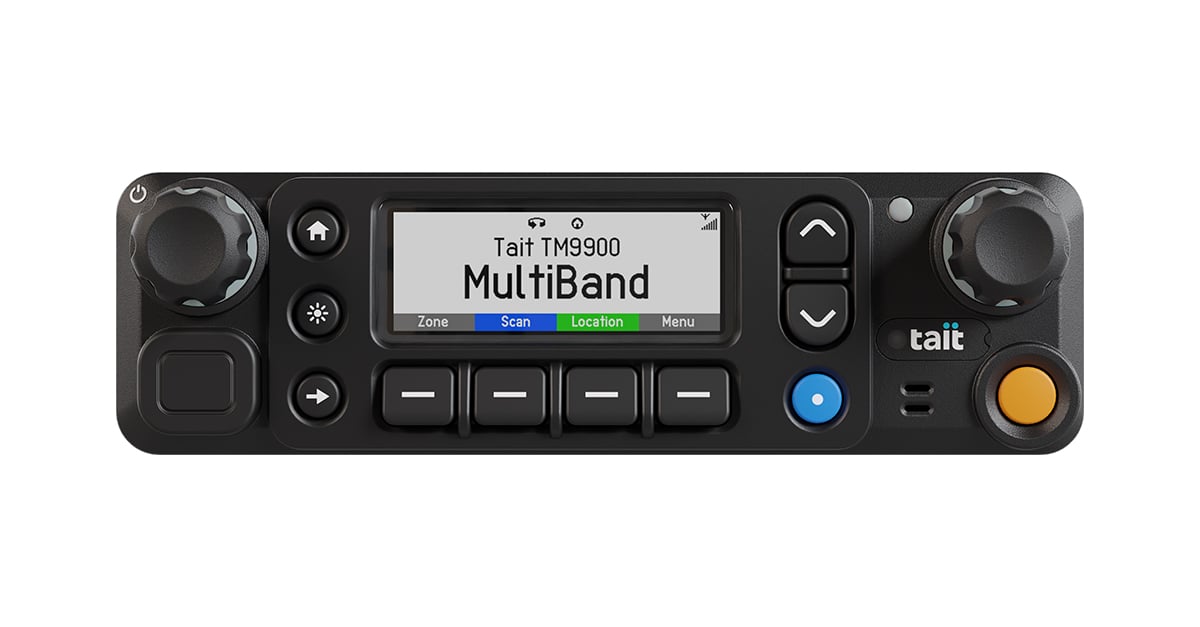
The TCH8 prioritizes speed, recognition, and low cognitive effort under pressure.
Designed for operations where communication is central to success in critical moments, it supports rapid interaction and reduced cognitive load through highly recognizable physical controls that minimize the need to navigate menus or remember the role of function buttons.
Dedicated home and brightness buttons minimize the chance for errors when there’s no room for false activation. Dual control knobs allow users to adjust volume and navigate channels without needing to look away from their primary task — mirroring the design of Tait’s DMR and P25 portable options.
Bluetooth in the control head allows for the pairing of wireless accessories, enabling users to move in and out of the vehicle more easily. This is the most flexible control head with both local and remote mounting options for flexible access.
For mission-critical users (e.g police, ambulance and fireground crews) that require more capability in a control head with frequent movement in and out of vehicles, shared access to the radio, and coordination across multiple channels in real time, the TCH8 enables the flexibility needed for coordination-heavy operations.
"Every interaction choice is about keeping attention on the mission, not the device."
Tait UX Designer, Bonnie Duggan
In practice, teams often share characteristics across these examples, and the control head chosen depends on what is prioritized most by the team.
When to choose a remote mount control head
Remote mounted control heads and radio bodies are installed in separate parts of the vehicle, making it easier to mount the control head in a variety of locations and vehicle types where it can be easier to see and use than a local control head.
If needed, two control heads can be connected to a single TM9000, to provide radio access from different parts of the vehicle. TCH4, TCH6 and TCH8 have options for single or dual control heads
How do Tait’s control head options stack up?
Let’s get down to some specifics and compare the features, installation capabilities and configuration alternatives of each option side by side to weigh up against your preferences.
Need a deeper dive into the details?
Explore all the features, speaker and microphone options and installation kits of each control head in the Tait Mobile Radio Accessories Catalog.
Choose a control head that works the way your team does
Choosing the right control head is about understanding your team's real-world requirements and how these shape interface, configuration, and installation preferences.
When the control head matches the mission, communication becomes faster and more reliable, while also enhancing user confidence. When it does not, even a high-performing radio system can become difficult to use when it matters most.
By understanding vehicle requirements, where your users operate, their communication patterns, and how much attention they can give to the radio, you can make a decision that supports both performance and safety in the field.
COMMENTS