
.webp?width=300&name=APR20_SC_Mining%20Blog%20Images%20Apr_%20(1).webp)



Mining communications networks rarely fail because the technology is inadequate. More often, they struggle because the way a mine operates changes faster than the network was designed to adapt.
In real-world mining environments, the physical shape of the site is in constant motion. Open pits deepen and widen, underground headings extend, and work areas open, close or relocate. Each of these changes alter how radio signals travel across the site, affecting coverage, signal strength, interference, and network capacity in ways that are not always immediately obvious.
Communications networks, however, are often designed around a fixed snapshot of a mine at a specific point in time. Areas that were once within reliable coverage can fall into shadow, new production zones may sit beyond the original RF design, and increased activity can place unexpected load on the network. Even small gaps in communications performance can have serious implications for worker safety, coordination between teams, and emergency response in these safety-critical environments.
Understanding how these challenges emerge in day-to-day operations is the first step toward designing future-proof communications infrastructure that can evolve alongside the mine and continue to support safe, efficient operations over time.
How mining environments affect radio signal performance
The physical features of a mine directly influence how radio frequency (RF) signals behave, determining where coverage is strong, where it weakens, and where it fails entirely.
In open-pit mines, depth and geometry are critical factors.
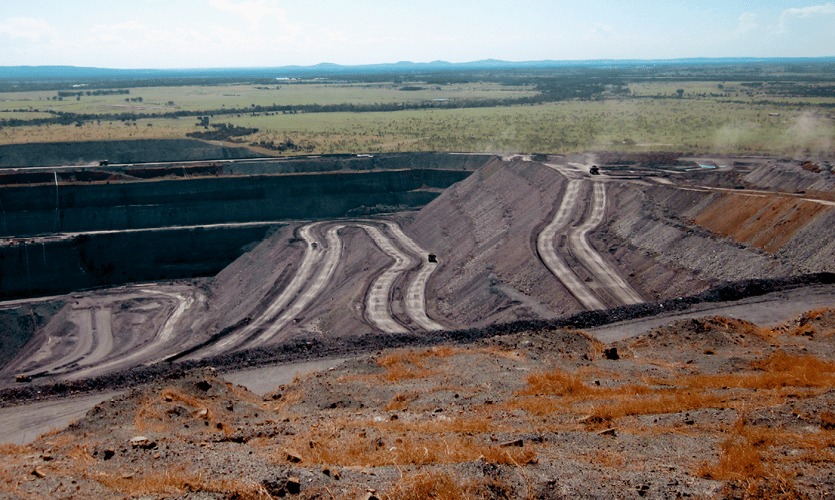
As pits deepen, high walls, batters and spoil accumulation can block line-of-sight paths between radios and base stations. RF signals may be reflected off rock faces or heavy machinery, creating areas of interference or inconsistent audio quality. Large mobile equipment also acts as a moving obstacle, altering signal paths throughout the day as haul trucks and excavators change position. What works for a shallow pit or early production phase may no longer provide reliable coverage as the mine expands downward or outward.
Underground environments present a different set of challenges.
Rock inhibits RF energy, preventing signals from propagating freely. Instead, radio signals must be guided through tunnels and shafts using dedicated RF infrastructure via waveguiding and reflection. As new headings are developed, the RF path must be extended in parallel, or coverage will face decreasing performance at edge of the existing infrastructure.
Remote mining locations add further complexity with little or no existing local communications infrastructure.
This means that all network components, including towers, repeaters, backhaul links, and power must be installed and maintained on site. Distance terrain, and limited access constrain where infrastructure can be placed, directly affecting coverage models and network resilience.
Environmental conditions compound these physical challenges.
Dust, vibration, moisture, and temperature extremes place constant stress on antennas, connectors, cabling, and electronics. Over time, these factors can degrade RF performance even if the original network design was sound. In mining, reliable communications depend on how well the infrastructure withstands harsh conditions while remaining adaptable as the site evolves.
The assumptions that break communications networks in evolving mine layouts
Mining communications networks are typically designed using a set of assumptions about where coverage is required and how much traffic the network needs to support. But in dynamic mining environments, both sets of assumptions are frequently challenged as operations evolve.
Coverage planning is usually based on the current physical layout of the mine alongside the plans for expansion; however, things don’t always go to plan.
Changes to known production areas, access routes, and infrastructure zones may change slower or faster than anticipated or take a new direction entirely. The risk is not always a complete loss of communications, but inconsistent or degraded coverage in newly developed or altered areas. Workers may experience intermittent connectivity, reduced audio quality, or coverage gaps that only appear under certain conditions. These issues often emerge gradually, making them harder to detect until they begin to affect safety or operational efficiency.
Capacity also presents a potential issue as network design relies on assumptions about where users will be concentrated and how much traffic the network will carry.
Peak activity periods, shift changes, incident response, and temporary work zones such as maintenance shutdowns or construction areas can rapidly increase traffic in parts of the network that were never designed for sustained load. This can lead to congestion, delayed call setup, blocked calls, or degraded audio quality during critical moments.
These coverage and capacity challenges rarely appear as a single, obvious failure. More often, performance degrades gradually. From an operational perspective, the network may still appear “up,” but from a safety and productivity standpoint, it is no longer delivering reliable, predictable performance. In these scenarios, interoperability becomes increasingly important. Systems built on open standards are better able to accommodate incremental change, allowing coverage extensions and capacity upgrades to integrate cleanly as operational requirements shift.
Designing mining communications networks for evolving operations
Designing communications for a mine starts with accepting a fundamental reality: the network will need to change over time. Successful mining communications design is therefore less about achieving perfect coverage on day one and more about building an architecture that can evolve safely and predictably as operations progress.
Consider the future-state of your mine when planning for communications.
Communications design should account not only for current production areas, but also for likely site development, the accumulation of spoil and the temporary work zones that emerge during maintenance, construction, and shutdown activities. Antenna locations, base stations, and backhaul links must be selected with these future requirements in mind, so the network can be extended without constant redesign or disruptive rework.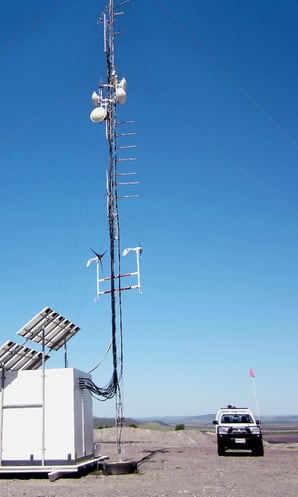
A critical part of this approach is designing around open, standards-based communications technologies. In long-life mining operations, proprietary or closed systems can limit how networks are expanded, integrated, or upgraded over time while open DMR solutions can allow infrastructure, devices, and RF components to be added or adapted incrementally.
This open standard interoperability becomes increasingly important where underground radio systems need to connect seamlessly with above‑ground LMR or broadband networks, enabling communication between underground teams and surface personnel using mobile devices.
Plan your communications network structure in layers for increased resilience.
A stable core provides reliable, site-wide communications for day-to-day operations, while extension mechanisms allow coverage to follow the work as it moves. As production areas shift or new headings are developed, coverage can be expanded incrementally rather than rebuilt from scratch. This layered, interoperable approach reduces risk and allows mining operations to respond to change without compromising reliability or safety.
Consider how temporary operational requirements will impact your communication plans.
Work areas created for maintenance, construction, or development are often expected to be short-lived, but in reality, they can remain active for extended periods. Rapidly deployable communications systems provide a practical way to support these areas, extending standards-based coverage quickly without committing to permanent infrastructure until the operational need is confirmed.
Continually assess performance to stay ahead of the changing mine environment.
Ongoing coverage testing and capacity reviews help identify emerging gaps or congestion early, allowing targeted adjustments within the existing architecture. When networks are built on open standards, these adjustments can be made using a broader ecosystem of compatible technologies and infrastructure.
The importance of RF design and infrastructure reliability
Effective RF design begins with understanding how signals must be delivered to operational areas, not just where equipment can be installed. In open-pit operations, this requires careful management of antenna height, orientation, and coverage patterns to account for pit depth, wall geometry, and the movement of large mobile equipment. In underground environments, RF signals must be deliberately guided through tunnels and shafts using purpose-built infrastructure such as leaky feeder systems or distributed antenna solutions, as rock absorption prevents signals from propagating freely.
Specialised RF infrastructure plays a critical role here. Providers such as RFI Technology Solutions develop antennas, leaky feeder systems, distributed antenna solutions, combiners, and signal amplification equipment designed specifically for demanding mining environments. These components enable RF designs to remain effective as pit geometry changes or underground workings extend, while withstanding the dust, vibration, moisture, and temperature extremes.
From a system perspective, robust RF infrastructure allows mission-critical communications platforms to deliver consistent performance across the life of a mine. When paired with open standards such as P25 and DMR, strong RF design helps maintain coverage, capacity, and reliability as operational demands increase, without being locked into proprietary dependencies.
Ultimately, RF design is not a one-time exercise, but rather an ongoing discipline that underpins the success of a mining communications solution.
Integrating mission-critical voice with broadband data
Data applications such as underground personnel and vehicle localisation, telemetry, remote monitoring, video, and automation are becoming increasingly important to productivity and situational awareness in mines. The challenge is introducing these capabilities without compromising the reliability of mission-critical voice communications.
In practice, land mobile radio (LMR) systems remain the foundation of mining communications because they are purpose-built for real-time, safety-critical voice. They provide predictable performance, group calling, and site-wide broadcast capabilities that are essential during day-to-day operations and emergency situations.
Broadband technologies are best introduced as a complementary layer rather than a replacement for LMR. When integrated carefully, broadband systems like RFI’s Digital Drift can support high-capacity data applications while allowing mission-critical voice to continue operating independently and reliably. Open, standards-based LMR systems provide the foundation for this layered approach, allowing broadband services to be introduced, expanded, or updated independently without disrupting safety-critical voice communications.
Platforms such as Tait AXIOM support this architecture by providing a standards-based broadband solution designed to interoperate cleanly with LMR networks. When deployed on top of robust RF design and resilient infrastructure, broadband becomes an enabler of safer, more connected operations rather than a source of additional complexity.
Mining operations evolve and communications must evolve with them
Mining communications challenges are rarely solved by adding more technology. They are solved by designing networks that reflect the changing conditions and variable coverage and capacity requirements of real-life mine environments.
By combining adaptable, standards-based Tait systems with resilient RF infrastructure from RFI Technology Solutions, mining operators can build resilient communications networks that evolve alongside their sites, maintaining reliable voice, supporting data applications, and reducing the risk of performance degradation as operations change.
To learn more about how Tait supports communications in dynamic mining environments, read the latest from our Strategy Insights Manager, Sandi Wendelken or get in touch with a Tait expert to discuss your site’s specific requirements.
COMMENTS